

When your labs are spread across a city, compliance can't be an afterthought.
Here's how Speck & Burke brought five London sites under one system.

5
sites managed under one programme

50+
fixed gas system inspections a year

200+
cylinder regulator inspections a year

1
Written Scheme of Examination structure covering the whole estate
The Problem
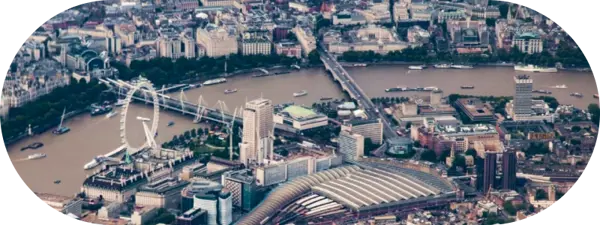
King's runs research and teaching labs across multiple London sites, including buildings at Guy's, St Thomas', Denmark Hill and the Franklin-Wilkins Building. Each site had its own equipment, its own department, its own research schedule, and no shared view of what gas systems were in place or when they'd last been checked.
That's a common position for a university to be in. Labs get added to, refurbished, and handed between departments over years. PhD and MSc students who did the gas safety training move on within a year or two, and the next intake often hasn't. Nobody's being careless. It's just easy for a fixed gas system to become someone else's problem, quietly, over time.
And in a live research environment, the cost of getting it wrong isn't abstract. A gas system that's not properly maintained doesn't just risk a compliance finding on paper. It risks the incubator that's keeping cell cultures alive, the instrument mid-analysis, the sample that took months to prepare. Insurers have been known to withdraw cover from university departments that can't show a proper inspection record, and when that happens, the department stops, not just the gas.
For an estate the size of King's, across five sites, that risk multiplies with every building that isn't on the same schedule.
"Somebody needs a single view across all of it. That's what was missing."
(Placeholder line reflecting the challenge, not attributed until King's approves a real quote.)
The Approach
Speck & Burke didn't start with inspections. They started with a survey, site by site, building an accurate inventory of every fixed gas system and cylinder regulator across the estate. Without that baseline, a maintenance plan is just guesswork with a schedule attached.
From there, the work split into two threads. The first was remedial: identifying what needed fixing now, and agreeing priorities with King's rather than dictating them. Some issues were urgent, some could wait for the next scheduled visit, and King's had the final say on which was which.
The second was structural: building a single ongoing inspection and maintenance plan that replaced five separate, informal pictures of risk with one. Engineers now visit each site on a known schedule, and because they carry parts with them, a site that fails a check can often be brought back to compliance in the same visit rather than needing a second shutdown.
That last point matters more in a university setting than almost anywhere else. Speck & Burke's engineers understand the instrumentation the gas is feeding, not just the pipework and cylinders, so a visit tends to resolve a problem rather than just document it. For a research team, that's the difference between losing an afternoon and losing a week.
Why it worked
The engineers who show up already know the lab. That familiarity, built up over repeated visits across the same sites, means less time spent re-explaining the setup and more time spent fixing what needs fixing.
"Testimonial text required here"
(Placeholder line reflecting the outcome, not attributed until King's approves a real quote.)
Outcome
The result is a management system covering all five sites, aligned with British Compressed Gas Association codes of practice. Written Schemes of Examination are in place for every location, satisfying Pressure System Safety Regulations requirements and giving King's a single structure to work from for every future inspection.
Staff across the estate know who's coming, why, and that the visit is there to keep their work running, not interrupt it.