

Once your installation is complete, annual PSSR inspections keep it compliant. We prepare the written scheme and carry out inspections against it each year.
Whether you're fitting out a brand new lab or extending an existing laboratory gas supply, getting the specification right from the start matters. Speck & Burke design and install laboratory gas systems specified around your instruments, gas types, pressures and flow requirements.

Labs often come to us at different points in a project. Some enquire at the design stage; others get in touch later in the project when the gas installation still needs to be specified. Both situations are familiar, and both are workable.
New laboratory being built from scratch
Converting office space into a wet laboratory or research facility
Extending laboratory gas supply to additional benches or floors
Replacing an old system that's no longer fit for purpose
Adding a new gas type or specialty gas to an existing installation
Contractors or architects needing a specialist to scope the gas element
A laboratory gas installation needs to be specified around the gases, equipment and layout. The specialist gases you're using, the pressures your instruments need, the flow rates, the tubing material and route all need to be specified before installation begins. High purity gas systems in particular need careful specification. Speck & Burke work through that detail before anything goes on the wall.
Site survey and review of architect or contractor plans
Gas specification (purity, pressure, flow rate per outlet)
Cylinder storage, gas cabinets, regulators, manifolds and associated hardware
Pipeline installation from cage to bench outlets
Pressure testing and commissioning
Written scheme support where the system falls within PSSR scope

Get in touch for a free site survey, there's no obligation, just clear advice on what the installation is likely to involve.
Laboratory gas installation needs careful specification because mistakes at design stage can affect performance, safety and future compliance. Labs that have worked with us on inspections often come to us when they move buildings, knowing we understand what their instruments actually need from a gas supply. Others arrive via a contractor who needs someone who can ask the right questions of the end user.
Moving to a new building and want lab gas supply handled by someone they trust
Architect or contractor spec is too vague to build from
Gas chromatography, mass spectrometry or other analytical work requires specific gas purity that a non-specialist installer may not allow for
Previous system didn't deliver what the lab needed
Adding new equipment that requires a new compressed air line or specialty gas supply
Refurbishment project where the existing gas system needs extending or replacing
"We've had quotes come through that just say 'hydrogen from cage to bench outlet.' That could mean almost anything. We go back with twenty questions, because getting those answers up front is what stops a lab from having to rip it out and redo it."
"The specification we'd been given by the main contractor just described pipe runs and outlet points. Nothing about gas purity or pressure for the GCs we were installing. Speck & Burke went through it, came back with a list of questions and rewrote the gas element of the spec properly. That's not something a general M&E contractor would have known to do."
Dr Stuart Mackenzie, Laboratory Manager
"We'd used Speck & Burke for inspections for a few years and when we moved to a new site it made sense to have them do the installation. They already knew what our instruments needed. The system was designed and built around the equipment rather than just run to the bench and left for us to figure out. The written scheme was in place before we went live."
Helen Croft, Facilities & Operations Manager
Most gas installations stop at the bench outlet. Speck & Burke go further. Because our engineers also service and install laboratory instruments, they understand what the laboratory gases have to do at the other end. That changes how a system gets specified - tubing diameter, material, pressure, gas purity all get matched to the actual equipment, whether that's a GC, a mass spectrometer, an incubator or a fume cupboard.
What a gas system installation includes

We start by reviewing plans or visiting site, depending on the project stage. We ask the questions about gas purity, pressure and flow rate that need answers before a single pipe goes in. If working via a contractor, we'll ask to engage with the end user directly wherever possible. Early involvement also helps with gas storage and distribution planning.

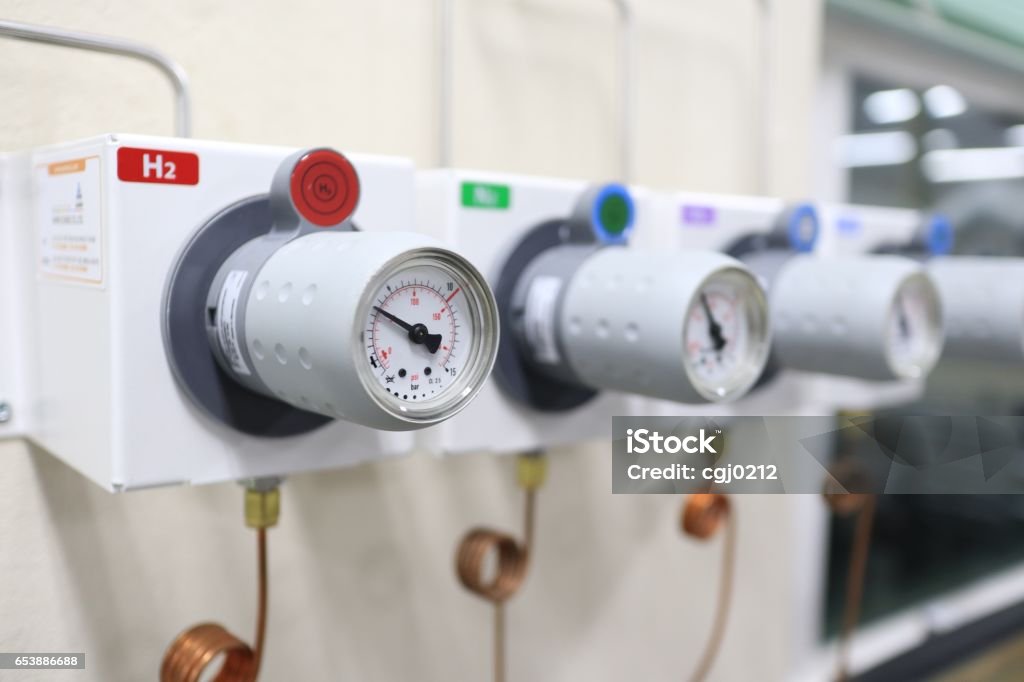
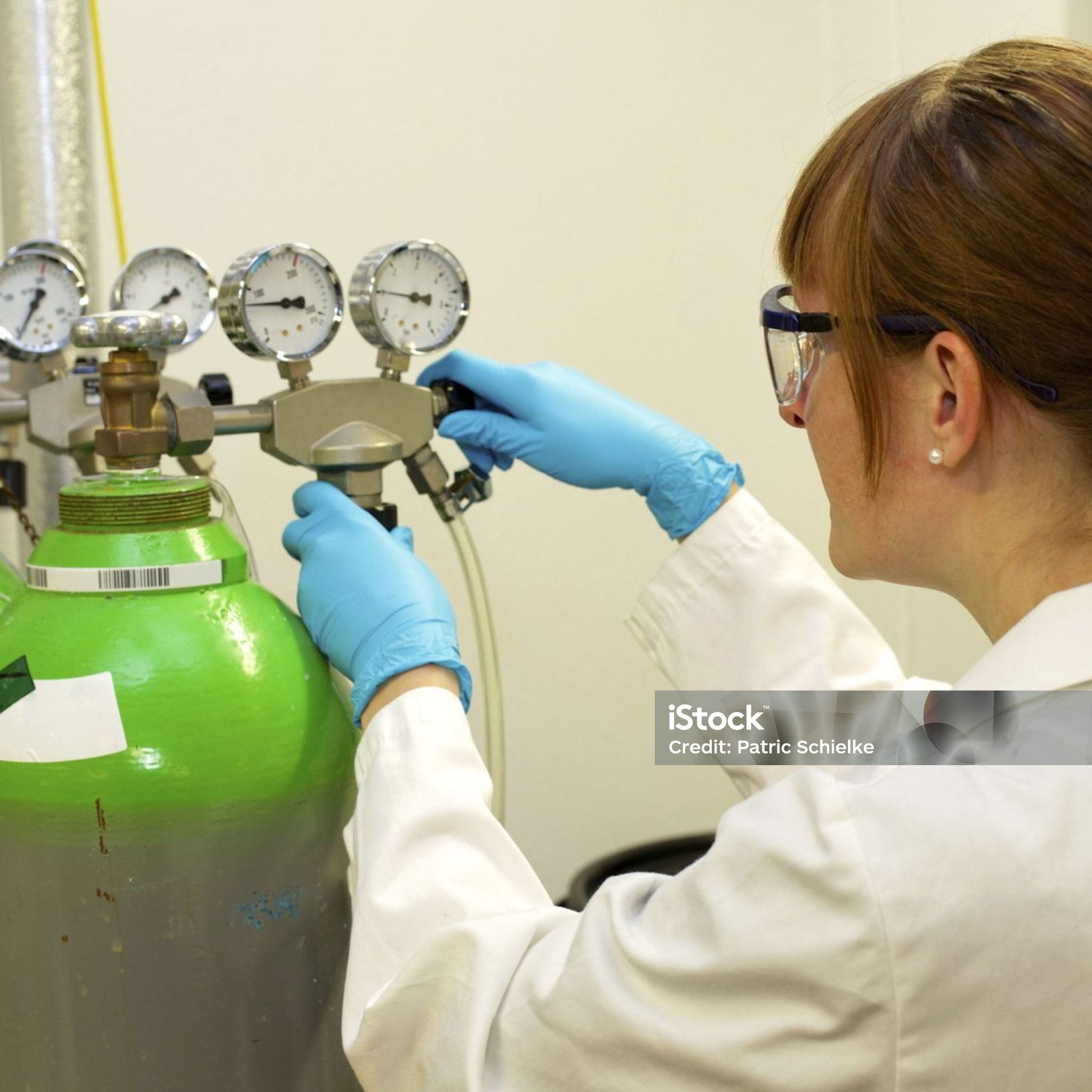
We supply and install the cylinder cage, compressed gas cylinder storage systems, gas regulators, manifold equipment and associated hardware. Cylinder storage is specified and installed to suit the gases, quantities, ventilation and site layout, with pipe runs concealed above ceiling or in trunking wherever the layout allows. Automatic changeover systems and manual changeover systems are available where continuous gas supply is needed.

We run tubing from the cylinder cage to each bench outlet, whether that's a single line across one lab or multiple laboratory gases rising through several floors. Stainless steel or copper pipework may be used, depending on the gas, purity requirements and system design. Compressed air lines are included where required. Extensions to existing systems are handled where appropriate.

Every gas system installation is pressure tested before handover. We check gas flow and confirm the system is delivering the right gas at the right pressure to every outlet. The system is tested and commissioned before handover.

Where a new installation falls within PSSR scope, a suitable written scheme of examination must be in place before the system is operated. We can prepare or support the written scheme as part of the handover, so the required documentation is in place before the system is used. Work is carried out with reference to relevant BCGA Codes of Practice, including CP4 for gas supply and distribution systems where applicable.
A gas system installation creates the laboratory gas system that will need inspecting, maintaining and managing for years. Many customers who come to us for gas installations continue with annual inspections and compliance support, which means we already know the system when we return. Because we installed the system, we already have the system details on record.
Annual PSSR inspections against the written scheme
Planned component replacement based on age, condition and inspection findings
Remedial work if something develops a fault
Instrument servicing for the equipment the laboratory gases feed
System extensions if the lab changes or expands
Some installation providers focus only on the pipework. Speck & Burke can also support the instruments and gas supply requirements connected to that system.. Speck & Burke can continue from that point - installing the analytical instruments the laboratory gases feed, servicing them and supplying the consumables they need. We also sell gas generators for labs that prefer on-site gas production over bottled gas. No need to hand the project to another contractor.
A single point of contact from design through to instrument installation
Engineers who understand the instruments as well as the laboratory gas systems
ISO 9001 accredited, with work carried out against relevant BCGA Codes of Practice where applicable
UK-wide support from a team experienced in laboratory gas installations
As early as possible. If we can engage with the design team or architect at the planning stage, we can make sure the gas specification goes into the tender documentation. That avoids vague specs being passed down the line and reduces the back-and-forth that slows projects down. Early involvement means fewer surprises once work starts on site.
This is common. We're used to operating as one of several subcontractors on a larger build or refurbishment project. Clear communication with the end user helps avoid specification issues, even when we are working through a main contractor. Where possible, we ask to have direct contact with the lab team so the specification is right for the scientific experiments and analytical processes it needs to support.
Yes. We can supply and install the required cylinder storage, regulators, manifold equipment, changeover systems and bench outlets. You don't need to source hardware separately. Manifold equipment, laboratory gas control equipment, automatic changeover systems and compressed gas cylinders storage solutions are all part of what we provide.
Laboratory gas systems and medical gas installation are different. If your lab uses laboratory gases for research, analysis, pharmaceutical industry work or similar purposes, you have a laboratory gas installation requirement, not a clinical medical gas one. Speck & Burke are laboratory gas specialists and can help.
Neat, well-concealed pipework - either above the ceiling or in plastic trunking - with a properly labelled cage, gas cabinets where required, and clean outlet points at the bench. Every gas system installation is pressure tested before we leave. We wouldn't hand over anything we wouldn't be happy to show as a reference site.
It varies considerably depending on scale. A single gas line into one room might take a day. A multi-gas, high purity gas system across several floors of a new building will take significantly longer. We'll give you a realistic timescale once we've seen the plans and the site.
Call us or book a free site survey to talk through what your project needs - no obligation, just a clear conversation.

Once your installation is complete, annual PSSR inspections keep it compliant. We prepare the written scheme and carry out inspections against it each year.

Where a new laboratory gas installation falls within PSSR scope, a written scheme of examination may be required before the system is operated.

If something develops a fault or a component fails between inspections, we investigate and fix it promptly.
We service the instruments your laboratory gas systems feed, meaning one company looks after the full picture from cylinder cage to analytical output.
If your lab uses flammable or toxic gases, gas detection may need to be considered as part of the design. We design and install these alongside or separately from gas installations.